

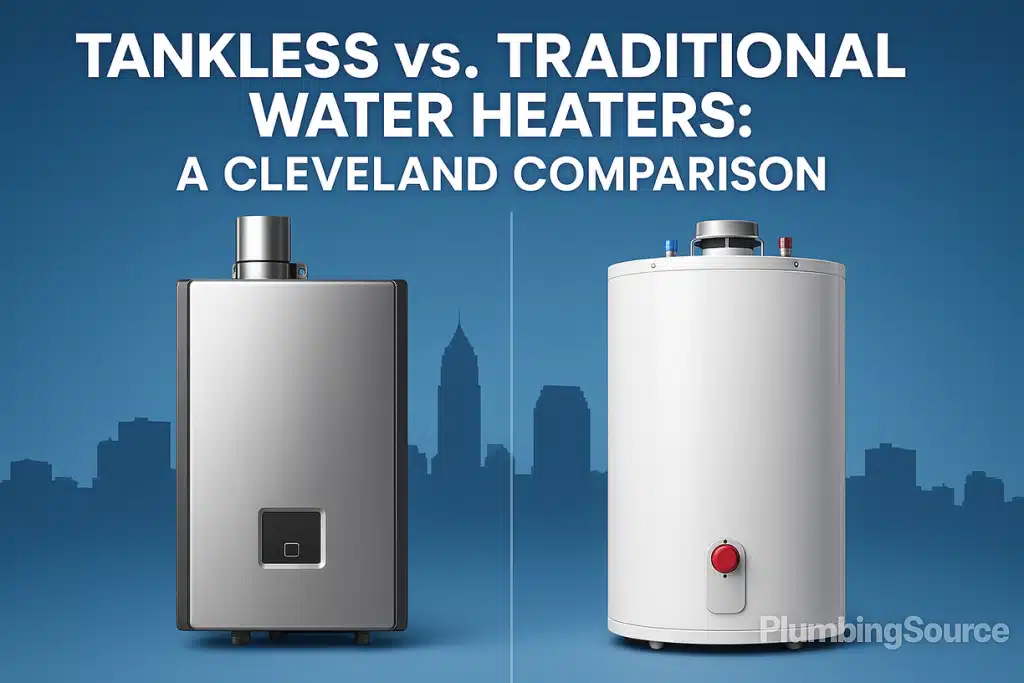
When Cleveland homeowners face water heater replacement decisions, the choice between tankless and traditional tank systems can feel overwhelming. With Northeast Ohio’s unique climate conditions and energy costs, making the right choice requires understanding how each system performs in our local environment.
Cleveland’s energy landscape presents specific considerations for water heater selection. With electricity rates averaging around 13.90 cents per kWh and natural gas readily available throughout Northeast Ohio, the fuel source you choose impacts both installation costs and long-term operating expenses.
Understanding Traditional Tank Water Heaters
Traditional tank water heaters remain the most common choice in Cleveland homes. These systems store heated water in insulated tanks, typically ranging from 30 to 80 gallons. The tank continuously maintains water temperature, ensuring hot water availability when you turn on the tap.
Tank water heaters operate using either natural gas or electricity. Gas models heat water faster and typically cost less to operate in Northeast Ohio, where natural gas infrastructure is well-established. Electric models offer easier installation but may result in higher operating costs given Cleveland’s electricity rates.
The lifespan of traditional tank systems typically ranges from 10 to 15 years with proper maintenance. Cleveland’s water quality can affect this lifespan, as mineral deposits from Lake Erie water sources may accumulate in tanks over time.
Installation costs for traditional tank water heaters in Cleveland typically range from $980 to $2,300, including the unit and professional installation. This makes them an attractive option for homeowners seeking immediate hot water solutions without significant upfront investment.
Exploring Tankless Water Heater Technology
Tankless water heaters, also called on-demand systems, heat water only when needed. Instead of storing heated water, these units use powerful heating elements or gas burners to instantly warm water as it flows through the system. This approach eliminates standby heat loss and can provide unlimited hot water supply.
These systems come in whole-house and point-of-use configurations. Whole-house tankless units serve entire homes, while smaller point-of-use models provide hot water for specific fixtures. Cleveland homeowners often choose whole-house systems for comprehensive coverage.
Tankless technology offers impressive longevity, with properly maintained systems lasting over 20 years. This extended lifespan partially offsets higher initial costs and makes tankless systems attractive for long-term homeowners planning to stay in their Cleveland properties.
The compact size of tankless units appeals to Cleveland homeowners dealing with limited basement or utility room space. These systems mount on walls and require significantly less floor space than traditional tanks.
Energy Efficiency Comparison for Cleveland Homes
Energy efficiency represents a crucial factor for Cleveland homeowners evaluating water heater options. Traditional tank systems lose energy through standby heat loss, where stored water gradually cools and requires reheating. This continuous cycle increases energy consumption, particularly during Cleveland’s cold winter months.
Tankless systems eliminate standby losses by heating water only when needed. This efficiency advantage can reduce water heating energy consumption by 24% to 34% for homes using 41 gallons or less of hot water daily. Larger families using more hot water may see smaller efficiency gains, but savings remain significant.
The Department of Energy reports that efficient water heaters can save families over $300 annually on energy bills. For Cleveland homeowners paying average electricity rates of 13.90 cents per kWh, these savings become particularly meaningful over the system’s lifetime.
Cost Analysis for Northeast Ohio Homeowners
Initial investment costs differ significantly between system types. Traditional tank water heaters offer lower upfront costs, making them accessible for homeowners with immediate replacement needs. Installation typically requires minimal modifications to existing plumbing and electrical systems.
Tankless systems require higher initial investment, often costing $600 to several thousand dollars more than traditional tanks. However, this investment includes potential long-term savings through reduced energy consumption and extended system lifespan.
Cleveland’s utility rates influence operating cost calculations. With natural gas readily available and competitively priced in Northeast Ohio, gas-powered systems of both types offer lower operating costs than electric models.
Long-term return on investment favors tankless systems for many Cleveland homeowners. The combination of energy savings, extended lifespan, and potential home value increases can offset higher initial costs over time.
Installation Considerations in Cleveland
Cleveland’s housing stock presents unique installation challenges and opportunities. Many homes feature older plumbing systems that may require updates for optimal tankless performance. Gas line sizing, electrical capacity, and venting requirements all influence installation complexity and costs.
Traditional tank replacements often proceed smoothly in existing installations. Most Cleveland homes already have appropriate connections and space for tank systems. This simplicity keeps installation costs lower and reduces project timelines.
Tankless installations may require system upgrades. Gas tankless units often need larger gas lines to supply adequate fuel flow. Electric models may require electrical panel upgrades to handle increased power demands.
Professional installation ensures proper system operation and warranty coverage. Experienced technicians understand Cleveland’s building codes and permit requirements, ensuring installations meet all local standards.
Performance in Cleveland’s Climate
Northeast Ohio’s climate creates specific performance considerations for both water heater types. Winter temperatures affect incoming water temperature, influencing how hard systems work to deliver hot water at desired temperatures.
Traditional tank systems maintain consistent performance regardless of incoming water temperature. The stored water buffer helps maintain steady hot water delivery even when incoming water temperatures drop during Cleveland’s coldest months.
Tankless systems face greater challenges with cold incoming water. When groundwater temperatures drop to 40 degrees or lower, tankless units must work harder to achieve target temperatures. This increased demand can affect flow rates and energy consumption during peak winter months.
Making the Right Choice for Your Cleveland Home
Choosing between tankless and traditional water heaters depends on multiple factors specific to your situation. Family size, hot water usage patterns, available space, and budget all influence the optimal choice for your Cleveland home.
Large families with high simultaneous hot water demands may benefit from traditional tank systems’ immediate availability. Multiple showers, dishwasher operation, and laundry needs can challenge tankless systems’ flow rate capabilities.
Smaller households or those with sequential hot water usage patterns often find tankless systems ideal. The unlimited hot water supply and space savings appeal to many Cleveland homeowners, particularly those in older homes with limited utility space.
Frequently Asked Questions
How long do tankless water heaters last compared to traditional tanks in Cleveland?
Tankless water heaters typically last 20+ years with proper maintenance, while traditional tank systems last 10-15 years. Cleveland’s water quality requires regular maintenance for both types, but tankless systems generally provide longer service life.
What are the average energy costs for each system type in Cleveland?
With Cleveland’s average electricity rate of 13.90 cents per kWh, electric water heaters cost $49-65 monthly to operate. Tankless systems can reduce these costs by 24-34% for typical households. Natural gas systems offer lower operating costs for both types.
Do tankless water heaters work well during Cleveland winters?
Tankless systems work effectively in Cleveland winters but may experience reduced flow rates when incoming water temperatures drop below 40 degrees. Proper sizing and professional installation ensure adequate performance during cold months.
What size tankless water heater do I need for my Cleveland home?
Sizing depends on simultaneous hot water demands and incoming water temperature. A typical Cleveland family needs a unit capable of heating 40-degree incoming water to 120 degrees while maintaining adequate flow for multiple fixtures.
Are there rebates available for efficient water heaters in Cleveland?
Various utility and government programs offer rebates for high-efficiency water heaters. Check with local utilities and energy efficiency programs for current incentives that can offset installation costs.
How does Cleveland’s water quality affect different water heater types?
Cleveland’s mineral-rich water from Lake Erie sources can cause sediment buildup in both system types. Traditional tanks require periodic flushing, while tankless systems need annual descaling. Regular maintenance prevents efficiency loss and extends system life.
Ready to upgrade your Cleveland home’s water heating system?
The Plumbing Source has served Northeast Ohio homeowners since 1985, providing expert installation and service for both tankless and traditional water heaters. Our experienced technicians understand Cleveland’s unique requirements and can help you choose the perfect system for your home and budget. Contact us today for a free consultation and discover how the right water heater can improve your comfort while reducing energy costs. Visit plumbingsource.net or call us to schedule your appointment and take the first step toward better hot water performance in your Cleveland home.