

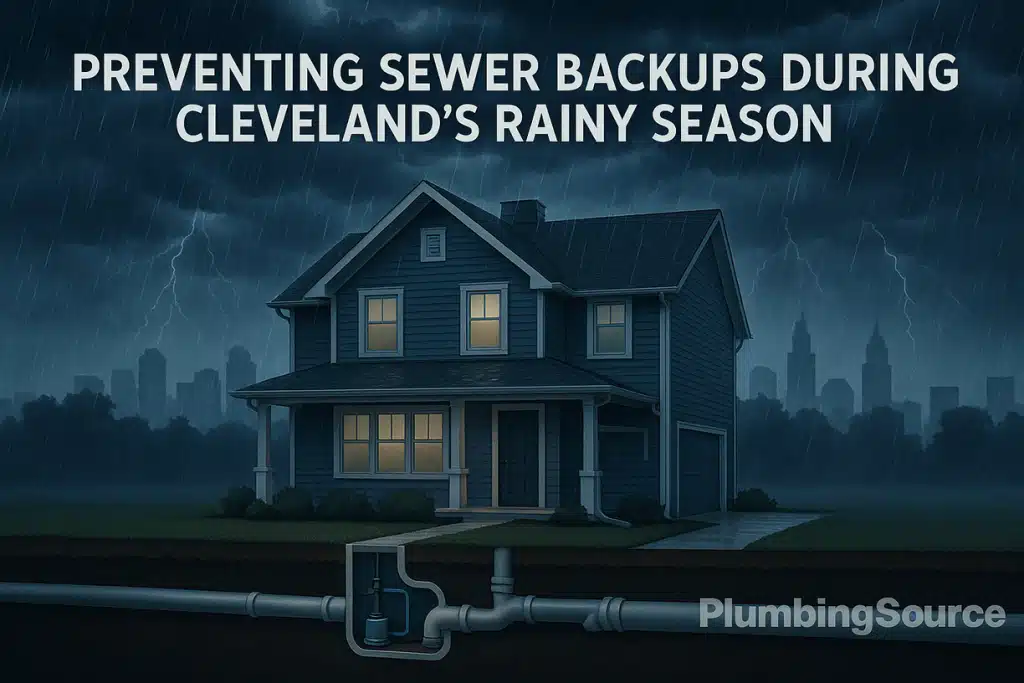
Cleveland homeowners and business owners know the stress that comes with heavy rainfall. When storm clouds gather over Northeast Ohio, many property owners worry about more than just getting wet. They worry about sewer backups that can cause thousands of dollars in damage and create serious health hazards.
The good news is that sewer backups are largely preventable with the right knowledge and preparation. Understanding how Cleveland’s unique weather patterns affect your plumbing system can help you protect your property before problems start.
Why Cleveland’s Weather Creates Perfect Conditions for Sewer Problems
Cleveland receives an average of 39 inches of rainfall each year, but recent weather patterns have become more intense. Between 1970 and 2024, Cleveland’s hourly rainfall intensity increased by over 18%.
Spring and summer months bring the heaviest precipitation to our region. Several factors combine to overwhelm sewer systems:
Rapid snowmelt in spring adds extra water to already saturated ground. When this combines with spring rains, the result is often too much water for aging sewer infrastructure to handle.
Intense summer storms can dump several inches of rain in just a few hours. Cleveland recorded 3.19 inches of rain within just a few hours during one July morning, breaking daily rainfall records.
Saturated soil conditions prevent proper drainage around foundations. When the ground cannot absorb more water, it flows directly into storm drains and sewer systems.
These conditions create the perfect storm for sewer backups in both residential and commercial properties throughout Northeast Ohio.
Understanding Your Sewer System and Backflow Prevention
Most property owners do not think about their sewer system until something goes wrong. However, understanding how your system works is the first step in preventing costly backups.
Your property’s sewer line connects to the municipal sewer system through a main connection. During heavy rains, the municipal system can become overwhelmed. When this happens, sewage can flow backward through your connection and into your basement or lowest level.
Backflow prevention Cleveland residents need starts with understanding the difference between sanitary sewers and storm drains. Sanitary sewers carry wastewater from your home or business to treatment facilities. Storm drains handle rainwater runoff from streets and parking lots.
In older areas of Cleveland, some properties still have combined sewer systems that handle both types of water. During heavy rains, these systems become overwhelmed more quickly than separate systems.
Essential Sewer Maintenance for Northeast Ohio Properties
Regular sewer maintenance in Northeast Ohio requires a proactive approach. Waiting until you have a backup is like waiting until your car breaks down to change the oil.
Professional drain cleaning should happen at least once per year for most properties. Commercial properties with heavy use may need cleaning every six months. This service removes buildup that can slow drainage and contribute to backups during heavy rains.
Video sewer inspections use special cameras to look inside your sewer lines. These inspections can identify cracks, root intrusion, or other problems before they cause backups. Many Cleveland area properties have older sewer lines that develop small cracks over time.
Hydro jetting services use high-pressure water to thoroughly clean sewer lines. This method removes grease, soap buildup, and other debris that regular snaking cannot reach. For commercial properties like restaurants, hydro jetting is especially important for removing grease buildup.
Residential Sewer Backup Prevention Strategies
Homeowners in Cleveland can take several steps to protect their properties from sewer backups during rainy seasons.
Install a backwater valve in your main sewer line. This device allows sewage to flow out of your home but prevents it from flowing back in during municipal system overloads. Many Cleveland homeowners have found this to be their best defense against backups.
Maintain your gutters and downspouts to direct water away from your foundation. Clogged gutters can cause water to pool around your home’s foundation, increasing the risk of basement flooding and putting extra pressure on your sewer system.
Avoid flushing inappropriate items down toilets or washing them down drains. Items like wet wipes, feminine hygiene products, and cooking grease can create clogs that worsen during heavy rains.
Keep floor drains clear in basements and utility rooms. These drains provide an escape route for water during minor backups. If they are clogged, even small amounts of backup water can cause major damage.
Commercial Property Sewer Protection
Business owners face unique challenges when it comes to sewer backup prevention. Commercial properties often have more complex plumbing systems and face higher liability if backups occur.
Grease trap maintenance is crucial for restaurants and food service businesses. Grease that enters the sewer system can solidify and create blockages that affect entire neighborhoods during heavy rains.
Employee training helps prevent problems before they start. Staff should know what can and cannot go down drains. This is especially important in businesses like salons, medical offices, and manufacturing facilities.
Emergency response planning should include procedures for sewer backups. Know where your main water shutoff is located and have contact information for emergency plumbing services readily available.
Regular professional inspections can identify potential problems before they become emergencies. Commercial properties should have their sewer lines inspected at least annually, with more frequent inspections for high-risk businesses.
Warning Signs of Potential Sewer Problems
Recognizing early warning signs can help you address problems before they become major backups during Cleveland’s next heavy rainfall.
Slow drains throughout your property often indicate a problem in your main sewer line. If multiple drains are slow at the same time, do not wait for the next storm to address the issue.
Gurgling sounds from toilets or drains can indicate air trapped in your sewer line. This often happens when there is a partial blockage that could become complete during heavy water flow.
Sewage odors around your property may indicate cracks in your sewer line or problems with your vent system. These issues can worsen during rainy weather when the ground becomes saturated.
Water backing up in floor drains or the lowest fixtures in your building is a clear sign that your sewer line cannot handle current flow. This problem will only get worse during heavy rains.
Emergency Preparedness for Rainy Season
Even with the best prevention efforts, Cleveland’s increasingly intense weather patterns mean property owners should be prepared for emergencies.
Know your main water shutoff location and how to operate it. If you experience a backup, shutting off water to your property can prevent additional sewage from entering your building.
Keep emergency supplies including rubber gloves, disinfectant, and a wet/dry vacuum easily accessible. Quick action during a backup can minimize damage and health risks.
Have emergency contact information for qualified plumbing professionals who offer 24-hour service. During major storms, emergency services can be overwhelmed, so having multiple contacts is wise.
The Role of Professional Plumbing Services
While property owners can take many preventive steps on their own, professional plumbing services play a crucial role in comprehensive sewer backup prevention.
Licensed plumbers have the tools and expertise to properly install backflow prevention devices. Improper installation can actually make backup problems worse, so professional installation is essential.
Specialized equipment like high-pressure water jetting and video inspection cameras are not practical for most property owners to purchase. Professional services provide access to these important maintenance tools.
Code compliance is another important consideration. Cleveland and surrounding municipalities have specific requirements for backflow prevention devices and sewer connections. Professional plumbers ensure all work meets local codes.
Emergency response capabilities mean professional services can respond quickly when problems occur. During major storms, having an established relationship with a reliable plumbing service can make the difference between minor inconvenience and major damage.
Frequently Asked Questions
Q: How often should I have my sewer line cleaned? A: Most residential properties should have professional sewer cleaning annually. Commercial properties or homes with large families may need cleaning every six months. Properties with older sewer lines or frequent minor backups may benefit from more frequent cleaning.
Q: Will homeowner’s insurance cover sewer backup damage?
A: Standard homeowner’s insurance typically does not cover sewer backup damage. However, many insurance companies offer sewer backup coverage as an add-on policy. Check with your insurance agent about available coverage options.
Q: Can I install a backflow prevention device myself?
A: Backflow prevention devices must be installed by licensed professionals in most Cleveland area municipalities. Improper installation can create safety hazards and may violate local plumbing codes.
Q: What should I do if I experience a sewer backup during a storm?
A: First, ensure your safety by avoiding contact with sewage water. Shut off electricity to affected areas if there is standing water. Contact emergency plumbing services immediately, even during storms.
Q: How can I tell if my property has a combined sewer system?
A: Many older Cleveland neighborhoods have combined sewer systems. Your local municipal office can provide information about your property’s sewer connection type. Professional plumbers can also determine this during inspections.
Q: Are there financial assistance programs for sewer backup prevention?
A: Some municipalities in Northeast Ohio offer assistance programs for sewer backup prevention improvements. Contact your local government offices to inquire about available programs in your area.
Take Action Before the Next Storm
Cleveland’s weather patterns are becoming more intense, but sewer backups do not have to be inevitable. Taking proactive steps now can protect your property and give you peace of mind during the next heavy rainfall.
Do not wait until you see storm clouds gathering to think about sewer backup prevention. The time to act is now, while your system is working properly and professional services are readily available.
Contact The Plumbing Source today to schedule a comprehensive sewer inspection and discuss backflow prevention options for your Cleveland area property. Our experienced team understands the unique challenges that Northeast Ohio weather creates for plumbing systems.
Whether you own a home or manage a commercial property, we can help you develop a customized prevention plan that fits your needs and budget. Call us at your convenience to learn more about our comprehensive sewer maintenance and backflow prevention services.
Protect your property, protect your investment, and protect your peace of mind. Schedule your sewer system evaluation today.